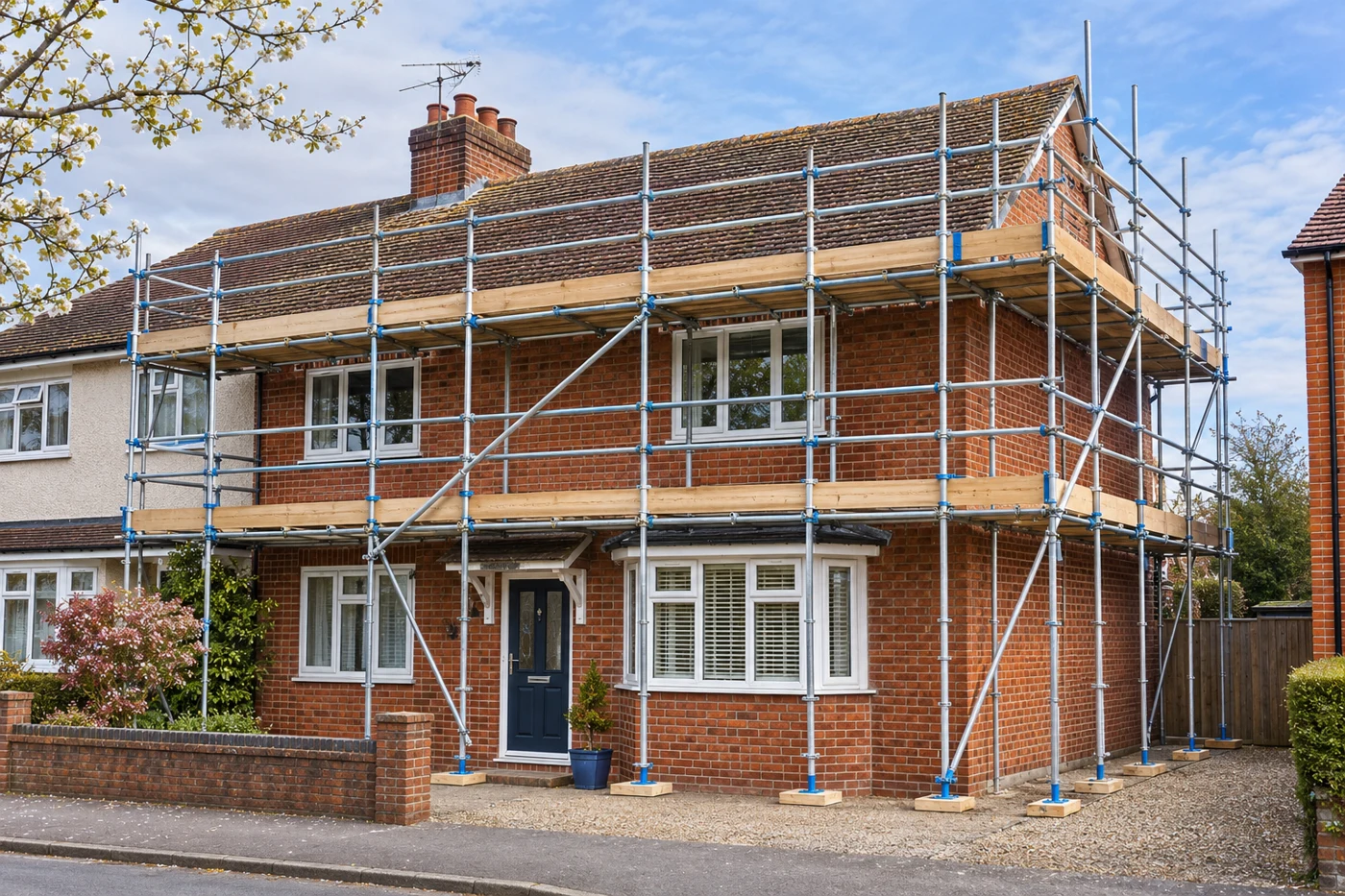
01Scaffolding for house renovations and extensions
A house scaffold provides repeated access to the outside of a building while repairs or construction progress. For an extension, the working positions may change as walls rise, roof connections are completed and external finishes begin. Include the existing house and proposed work in the same brief so the access is considered across those stages.
One renovation can involve a bricklayer, roofer, window installer and decorator. Agree which parts of the scaffold each trade needs and when. Planning the sequence together helps avoid removing access before the final contractor has finished, or assuming a platform intended for one task will suit another.
02Painting, rendering and repointing access
Exterior maintenance often needs a continuous working area across a wall, with room for the preparation as well as the final finish. Tell the provider whether the work covers the frontage, rear wall, gables or several elevations. Roofline details, window returns and surfaces above extensions should be included where they form part of the contractor’s scope.
For repointing or render removal, explain how materials will be handled and what the trade expects from the platform. The access arrangement and any loading requirements need to match that method. A small visible defect can be part of a much larger preparation area, so ask the contractor to define the full job.
03Scaffolding around an occupied home
Household access matters throughout the hire. Identify the entrance you will use, gates that must open, parking needs and paths used for deliveries. If the work is at the rear, show how equipment reaches the garden and whether that route crosses another owner’s land. These practical details help establish an arrangement that fits the property.
Conservatories, porches and low extensions can affect where supporting scaffold can stand. Wide photographs should show the structure below the work and the ground beside it. Support conditions and any design requirements need a competent assessment; an existing lightweight roof should never be assumed to be a scaffold base.
04What affects a domestic scaffolding quote?
The quotation depends on the building dimensions, working height, number of elevations, ground conditions and intended hire period. Rear access, bridging over an obstruction, planned alterations or a highway licence can change the scope. Clear property information helps make the quotation specific instead of relying on a general description of a two-storey house.
Ask the written quote to identify erection, the agreed access, hire duration and dismantling. Clarify how extra hire or a change in the building programme would be handled. Comparing the same work and period is more useful than comparing quotations that provide different elevations or leave later stages unconsidered.