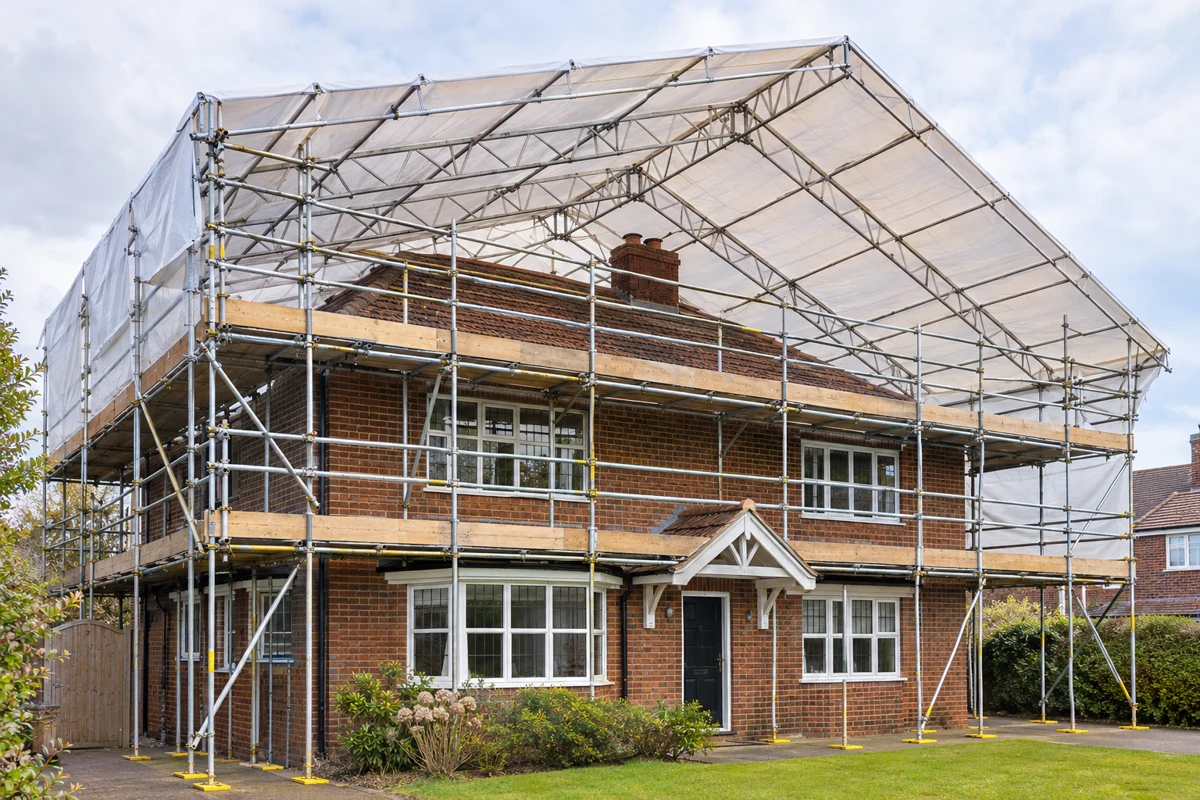
01Temporary roofing for re-roofs and loft conversions
A temporary roof is a covering structure used where the construction programme requires weather protection over an exposed area. It is distinct from an access scaffold at the eaves. Start by asking the roofer or builder which part of the building will be opened, how long that stage is expected to last and what protection the work needs.
For a loft conversion, drawings can show dormers, openings and roofline changes that are not visible in current photographs. Include that proposed outline and the construction sequence. The covering, working platforms and material movement need to be considered together before the scaffold arrangement is specified.
02Supporting scaffold and the space around the building
The covering needs a suitable support arrangement assessed for the actual site. Provide the roof dimensions where known and wide photographs showing the whole building, adjacent ground and boundaries. Conservatories, extensions and occupied entrances can affect the options and should be included from the beginning.
The position of the cover may differ from where its supporting scaffold needs to stand. Explain the unloading and carrying routes as well as the roof being covered. Design requirements must be established by the competent provider; a general enquiry or example photograph cannot specify a temporary roof system for the property.
03Material access, openings and construction stages
Roof work can involve lifting materials, changing the building outline or needing access openings during the project. Share those requirements before the cover is planned. A builder’s intended sequence is more useful than treating the temporary roof as an isolated item added after the access scaffold has been agreed.
The quotation should identify the covering and access scope, hire period and any planned changes. If the programme extends, raise the implications for the scaffold and any permissions before the original period ends. Changes to the covering or supporting arrangement must go through the provider.
04What protection and hire arrangements should be agreed?
Discuss the proposed system’s intended protection and any limitations relevant to the building work. A temporary cover is not an absolute guarantee that every part of a construction site stays dry in every condition. The builder still needs a coordinated approach to the exposed work and the property beneath it.
For a temporary roof quote, send the address, existing and proposed roof information, expected exposure period and access constraints. Dimensions, support conditions, covering arrangement and duration affect the scope. Agree the installation sequence before stripping begins and confirm how dismantling fits the final roofing stages.