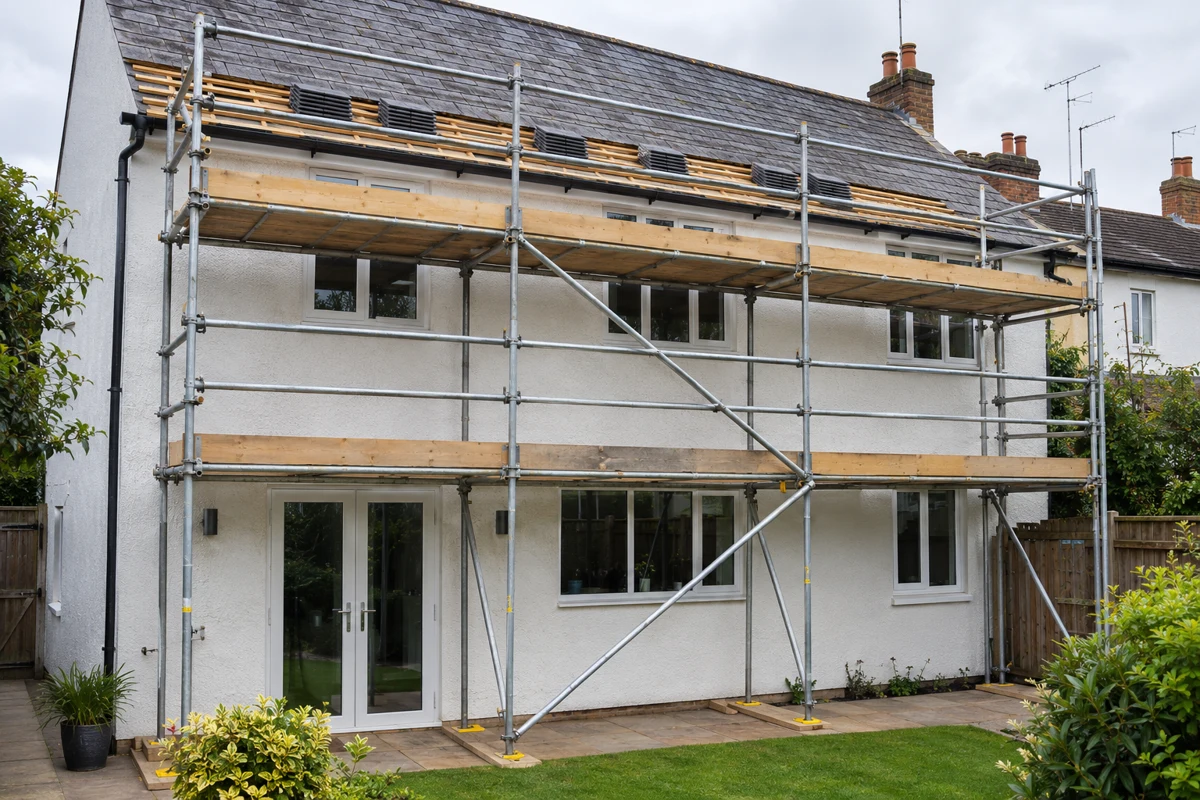
01Scaffolding for roof repairs and re-roofing
Roofing access should reflect the work on each part of the building. Replacing a section of covering, repairing a valley and re-roofing every slope can need different working positions. Ask the roofer to describe the areas involved, including eaves, gables and any chimney details being repaired at the same time.
A full strip and replacement also brings a construction sequence and material-handling requirements. Explain how the contractor intends to move materials and whether a loading area or another special arrangement is required. These requirements belong in the scaffold assessment, rather than being assumed once the roof work is underway.
02Gutter, fascia and soffit scaffolding
Roofline replacement can extend around corners and above rear additions even when the most visible defect is at the front. Identify every gutter run and fascia or soffit section in scope. A complete description helps the provider assess access across the roofline instead of quoting for only the easiest elevation.
If a decorator, solar installer or another contractor follows the roofing work, include their needs and dates in the same enquiry. The first trade’s completion date may not be the end of the hire. The arrangement must be assessed for its intended users and tasks, with any later change referred back to the provider.
03Solar panel scaffolding and difficult roof access
For a solar project, share the installer’s panel layout, proposed dates and access requirements. Explain whether panels are being fitted, removed for repairs or reinstalled after roofing work. Panel handling and equipment movement need to be considered against the scaffold’s intended use, not added as an informal extension of a roofing job.
A conservatory, porch or single-storey roof below the working area may change the supporting arrangement. Send wide views of the obstruction and surrounding ground, together with the roof slope above it. A site assessment can establish what is suitable without assuming the lower structure can support scaffold loads.
04Roof access or a temporary roof?
Roof scaffolding provides working access; a temporary roof adds a separate covering structure. If the work exposes the building, ask the roofer to define the weather-protection requirement before stripping begins. Eaves access alone should not be treated as a covering for an open roof.
For a roof scaffolding quote, supply the building address, relevant slopes, contractor’s scope and expected duration. Height, dimensions, obstructions, loading requirements and any highway permission can affect the arrangement. Confirm the agreed hire period and what happens if weather or another trade changes the programme.